
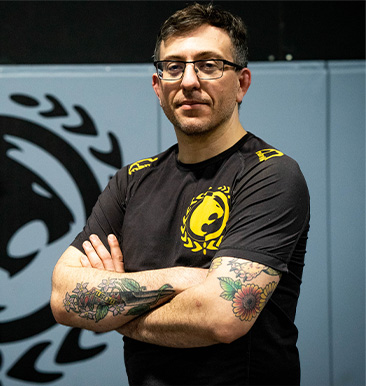
It’s my hope to share some of my experience with the larger community to help good people learn to protect themselves. There are plenty of solid jiu jitsu schools, boxing gyms, and various other fighting arts clubs that could do a wonderful job making the world a more dangerous place for bad people. But just knowing how to fight is not enough.
I implore my students to think of self defense as a change a rule set. A dramatic one, for sure, but still just a change. If you are a grappler learning to fight for MMA you must adapt and learn striking. You get your first amateur bout in PA there are no strikes to the head of a grounded opponent, there are shin guards. Rounds are short. You must learn and adapt. You are a bjj competitor that usually does sub only no gi and you go to an ibjjf tournament in the gi, be prepared for no heel hooks, no knee reaping.
Those that say “there’s no rules on the street” are sadly mistaken. Imagine a mma fight where if you can get out of the cage door you win. Or imagine explaining no rules to a jury of your peers when you have to explain running someone down who was retreating. There are plenty of rules. Those rules might be that you must protect someone in your care, or that your simply not allowed to shoot folks for being scary. Self defense and what we generally call “combatives” are their own thing, with their own rules and their own best practices. If your going to teach them I encourage you to study this point well.
And so in that vein I hope to give some guidelines here for those interested in this topic.
- You must understand the context under which the skills you use will be needed.
By and large the very best way to do this in my not so humble opinion is to get yourself immediately into a Shivworks Class , and take advantage of the Online Training offered. Anyone who follows this blog or any of my work knows I’m very biased here, and rightfully so. I understand violence, I understand crime, and I know Craig does too. If you happen to be a black belt in jiu jitsu and have no personal experience with real crime and violence and people are asking you for self defense classes you have a duty to get educated on the subject and not simply to apply your existing skills however formidable they may be to such a complex and important problem.
At our school all of our self defense instructors ( 4 locations, 4 weekly classes, 3 instructors doing this for well over a decade) are Shivworks alumni, as well as many of our senior coaches. You cannot teach my curriculum at Stout PGH / Team Renzo Gracie Pittsburgh if you have not experienced a Shivworks class, full stop. That’s my call on my classes, you may make other judgement calls but I implore you, being a good fighter in any art doesn’t translate to application if you do not understand the context. - You must train in all ranges.
Just because you love jiu jitsu and #jiujitsusavedmylife and the ground is your ocean cause iron sharpens lions or somesuch doesnt mean every problem is a jiu jitsu problem, or a boxing problem, or a gun problem. When all you have is a hammer every problem looks like a nail, until its time to fix the TV.
For physical fighting skills the three main ranges are unattached, stand up grappling, and grounded grappling. I prefer western boxing, grecco wrestling, and bjj to cover those ranges. Your selections may look different but you must cover all your bases. It does no good to have a great ground game with no takedown’s or wonderful striking but no ability to clinch. Being well rounded is the most dangerous skill to have. - Clinch
Ok, I just said all three ranges. We spend twice the time in the clinch than we do anywhere else. Why? I’m of the opinion if you want to control the fight you must dominate the transitional spaces. If you want to stay standing you must have takedown defense, and if you truly understood point 1 you will know there are times to control someone on the ground and times where you need to get back up to your feet under pressure. Without clinch work those choices are not yours to make. If you put hands on people for a living I believe this is non negotiable, and if you teach those people you need to understand how these skills work. - Be compassionate and supportive.
Many people who read my Failure and Resilience post will know that after a particularly rough experience Craig called me and made sure I was ok. That moment set me on this path and made us friends. But more than that it is part of the Shivworks mantra “Be honest about the problem. Do the work.” Part of being honest about the problem is understanding that the people who seek out these classes are not all alpha male super soldiers. You will be hands on with people with broken pasts, trauma, abuse, victims of assaults, and people who genuinely need these skills because they have been or will be victimized.
You will have people who leave class to cry, and you will need to check on them. You will have people who break under pressure, and you will need to help rebuild them. You will be working intimately with the vulnerable, and they need to be able to trust you. It is no light undertaking when someone reaches out because their cousin was assaulted in a stairway and is scared to leave the house and they want to send them to your class. This is no place for empty bravado. - Have a curriculum for fucks sake.
Ill give you mine, seriously. Ive posted it, for free. Ive put all of it, entire classes on IG @antifragiletraining you can watch. Coming from the school I come from with the teaching pedigree we have I have been lucky to come up not just with Shivworks pedagogy but with all our programs having beginner, intermediate, and advanced classes and defined lesson plans and progressions. We meet as instructors and review and adapt the lessons. We have private videos of each lesson and the main points so when you go to Fundamentals for closed guard week on Monday at one location and Wednesday at another you see the same lesson with the same coaching points. It’s easy to take that for granted.
Structure doesn’t mean locked in stone. When we see trends we adapt, we change, we try out new things. We are never “done”. - Be forever a student.
It is easy to rest on laurels. We aren’t doing this because its easy. We do it because it is necessary. We must always be learning, pushing ourselves, being vulnerable to failure. I have found the biggest gains in my ability to teach, in my personal technique, and in my ability to help my students learning from people newer than me. And lets be honest, the longer we are in this game the less people there are more experienced than us and the less people we can look to fill the need for appeal to authority. The innovation will come from the new folks, from the edges, from observations and experiences outside our view. If we don’t stay open to them we will miss them and you wind up a grumpy old black belt complaining about leg locks. - Ask for help.
Cecil Burch is up for sainthood for watching videos of me not even a white belt yet with my buddies literally just beating the shit out of each other in a gravel pit with a sim gun and giving me actual feedback. Craig would watch videos of me presenting his material to our private training group. I still have those old videos, and I’m sorry. The resources are there, now more than ever. Reach out, I’m happy to help.
Shawn Lupka
antifragiletraining@gmail.com
 Antifragile Training
1 thought on “Starting Self Defense and Combative’s classes at your Martial Arts School: A Guide”
Comments are closed.